Getting Your Poultry Farm Ready for Winter Heating Alone Is Not Enough
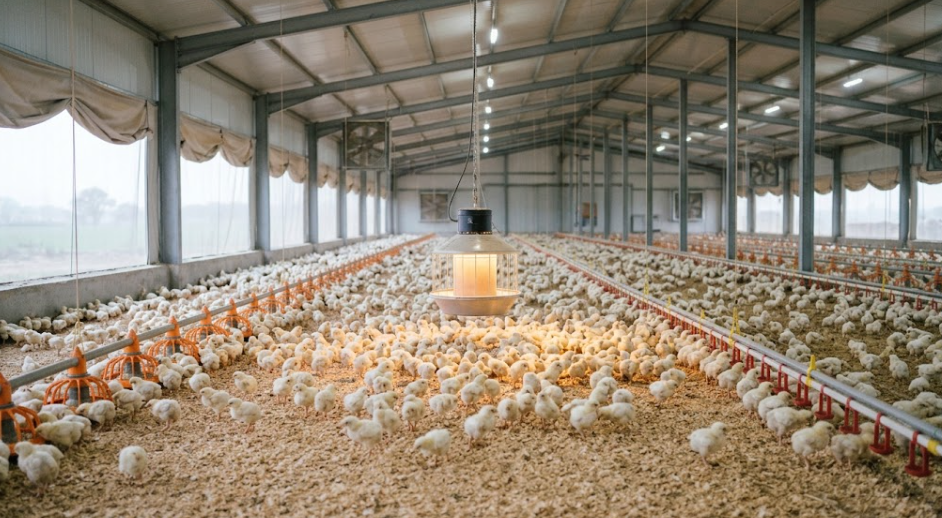
Sealing the house to hold heat can cost more than it saves. A practical guide to ventilation, heating and litter before and during winter.
When winter nights turn cold, many breeders close up the house to hold heat and save fuel. That saving can be expensive: without fresh air, ammonia and humidity rise, harming the birds’ respiratory systems and performance.
The practical rule is simple: keep the birds warm, but do not cut off their air.
Minimum ventilation is not wasted heat
Minimum ventilation means running fans for short, regular periods on a timer, even in cold weather, to remove moisture and gases and bring in clean air. Incoming air should be directed towards the roof so it mixes with warm air before reaching the birds, rather than falling on them as a cold draft.
Running time increases gradually as the birds grow. Relying on temperature alone to run the fans can leave stale air in the house for long periods.
Numbers to watch in the house
- Ammonia: ideally below 10 ppm; above 15 ppm calls for quick action.
- Carbon dioxide: below 3,000 ppm.
- Carbon monoxide: below 10 ppm.
- Relative humidity during brooding: 60% to 70%.
Temperature by age
Prepare the house 24 to 36 hours before the chicks arrive so the floor and litter warm up. For broilers, air temperature usually starts at about 30°C and drops gradually each week to about 20°C. Always check the guide for your breed.
Do not rely on the thermometer alone. Chick behavior is an important signal: huddling under heaters or along walls points to a temperature or draft problem.
Litter is your line of defense
Use dry, dust-free litter at a sufficient depth, usually 5 to 8 cm in winter. Remove wet patches around water lines promptly, because damp litter increases ammonia.
Cold eats into your feed
In the cold, birds use more feed energy to hold their body temperature instead of turning it into meat or eggs, so feed conversion worsens and costs rise. That makes house temperature a feeding decision as much as a heating one. Review any change to your feeding program with a specialist, and do not raise protein at random.
Safety first
Make sure every combustion heater has a sound flue. Carbon monoxide has no color or smell and is dangerous to birds and workers. Check gas and diesel lines, keep fire extinguishers ready, and test the backup generator regularly.
Biosecurity
Winter is a sensitive season for respiratory diseases, including avian influenza. Keep wild-bird netting intact, disinfect farm entrances, and dispose of dead birds safely. If symptoms appear, contact your veterinarian, who is responsible for diagnosis, treatment and vaccination.
Quick pre-season checklist
- Seal cracks and check curtains and insulation.
- Inspect heaters and flues.
- Set ventilation timers and sensors.
- Store enough dry litter.
- Insulate water tanks and check the lines.
- Test the generator.
- Check netting and disinfection equipment.
For questions about our feed, contact us.
References: Aviagen, Cobb and Hy-Line guides, EFSA, FAO and Egypt’s General Organization for Veterinary Services.